The deployment of new fission reactors in the United States and internationally depends critically on reducing capital cost and deployment risk. While construction management plays a major role in overall project cost, design choices that enable standardization, licensing efficiency, and robust performance under realistic operating conditions are also essential. Some of our research addresses these challenges directly, for example by evaluating open and modular design paradigms and by quantitatively assessing how design and modeling assumptions propagate into cost and risk.
A second pathway for near- and mid-term reactor deployment is the development of special-purpose and advanced reactor concepts that serve specific functions. These include microreactors, high-temperature reactors, molten salt systems, and reactors optimized for fuel utilization or resilient operation. Although such systems may be more expensive on a per-kWe basis, they can be economically competitive by providing capabilities such as remote siting, enhanced safety margins, improved fuel utilization, or resilient power under constrained grid conditions.
Finally, the timely deployment of innovative fission reactors requires demonstrably accurate and validated simulations that capture coupled multiphysics behavior under both steady-state and transient conditions. Our work emphasizes high-fidelity modeling, benchmarking against historical and modern experimental data, and the synthesis of neutronics, thermal–hydraulics, materials behavior, and reactor dynamics.
Separate and Multiphysics Effects IRPhEP Benchmark Evaluation using SNAP Experiments
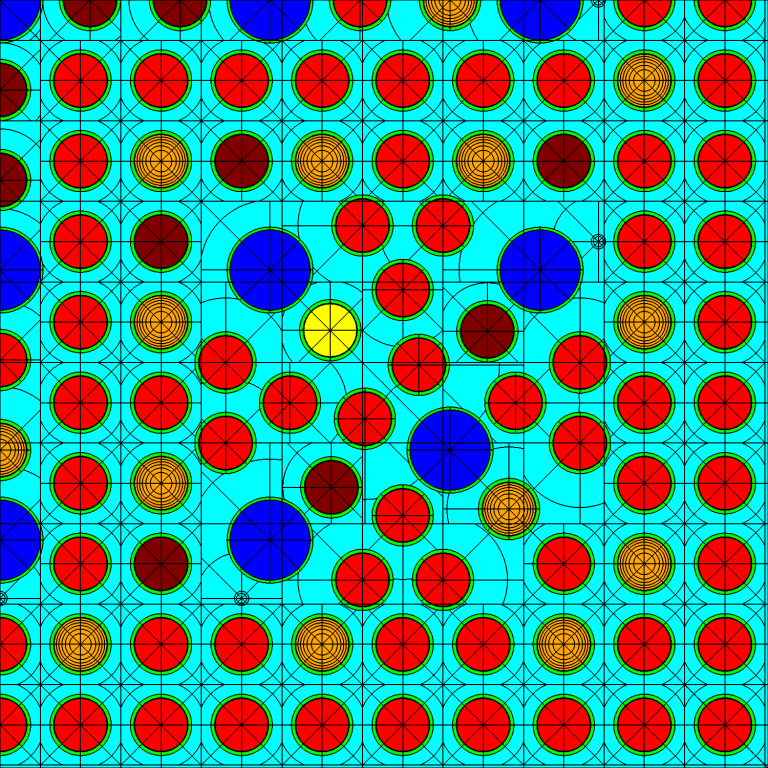
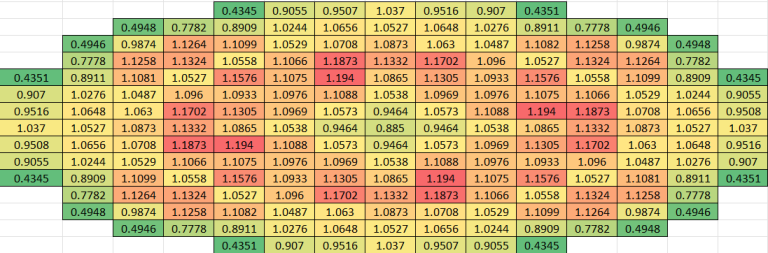
We are working with Georgia Tech, INL, BWXT, and LANL to prepare a benchmark evaluation for the SNAP 8 Experimental Reactor (S8ER), a highly reflected space microreactor that was built and operated in the 1960s. This project benchmarks data from both steady-state dry critical experiments and wet operating experiments. We utilize cutting-edge tools such as Serpent and OpenMC to evaluate the steady-state characteristics of the reactor and couple these with other physics solvers from the MOOSE suite to incorporate direct thermal feedback for the operating experiments. For the wet experiments, we are also comparing two different methods for evaluating multiphysics phenomena to understand their differences and what those differences would mean for future reactor design work. This project incorporates much of the reactor design process and highlights the impact of real-world inconsistencies that cannot be exactly modeled or that are not expected. For this reason, the project synthesizes a broad range of nuclear topics, such as neutronics, thermal-hydraulics of advanced reactors, and materials science.
This work is supported by the U.S. Department of Energy, Office of Nuclear Energy, through the Nuclear Energy University Program.

Open Architecture for Nuclear Cost Reduction
In a collaboration with the University of Wyoming, UC Berkeley, Idaho National Laboratory, and TerraPraxis, we will develop a method for open architecture–enabled standardized design of modules and interfaces across advanced reactor designs and evaluate the extent to which this is possible.
Together with our collaborators, we will develop a method for open architecture–enabled standardization across sites; identify how to overcome the commercial and legal challenges to collaboration and information sharing among companies; and evaluate, through quantitative modeling, how open architecture can reduce costs.
This work is supported by the U.S. Department of Energy, Office of Nuclear Energy, through the Nuclear Energy University Program.
Telescopic Control Rod for Significant Reduction in HTR Height and Cost
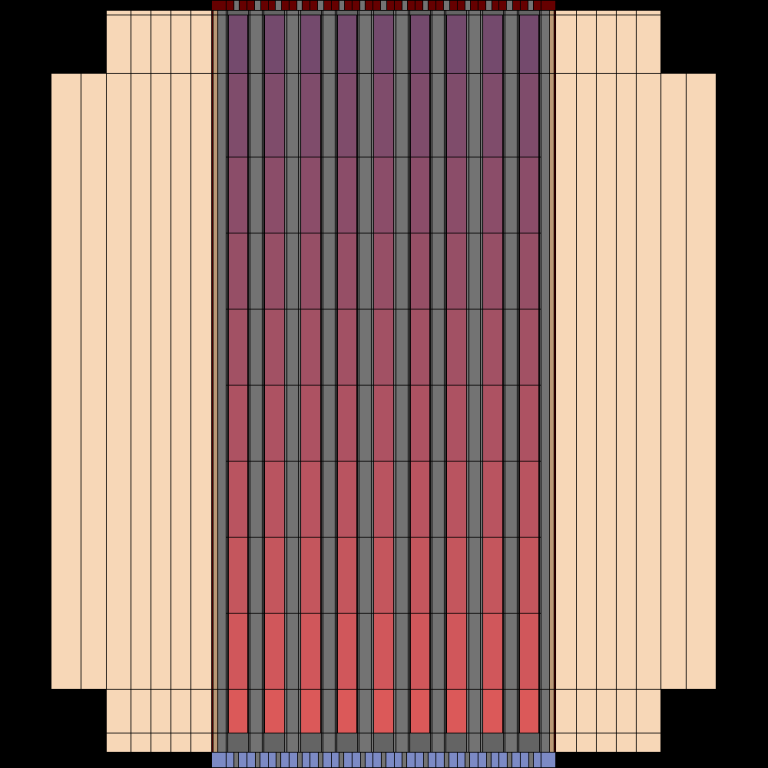
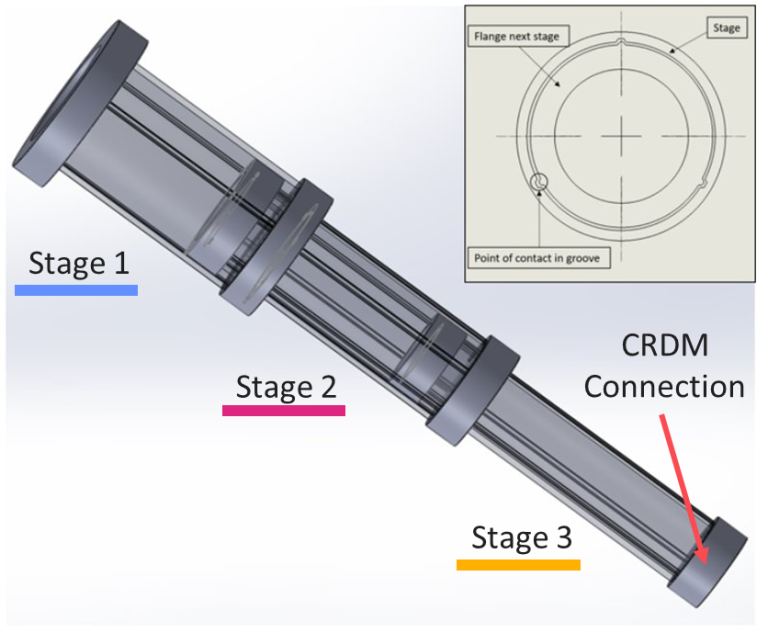
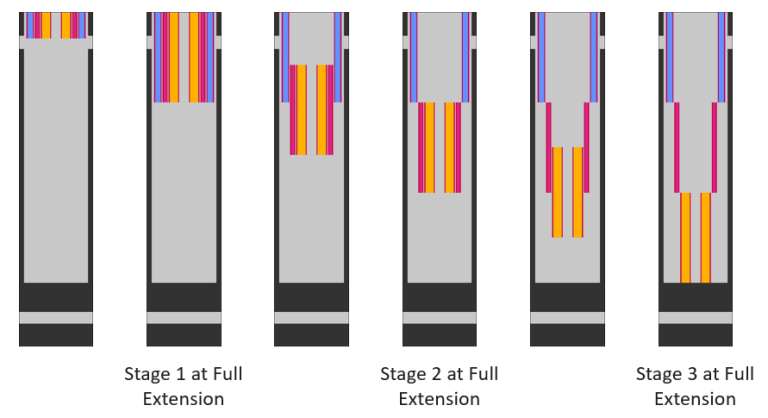
Due to their low power density and high aspect ratio, high-temperature reactors (HTRs) have tall cores that may (Xe-100) or may not (HTR-PM) be contained within a silo embedded in the ground. Incremental increases to silo depth are high cost; thus, we propose a compact design for a small modular HTR control rod that extends telescopically. The technology is applicable to both pebble-bed and prismatic HTRs. This compact component substantially reduces the length of the above-vessel control rod housing compartments, thereby reducing the depth of the silo and offering potentially major cost benefits. The primary objective of this project is to develop the telescopic control rod to the point of being technically feasible and licensable through a multidisciplinary design study encompassing theoretical and experimental work, performed in collaboration with the MADCOR laboratory at UW–Madison, Framatome, X-Energy, INL, and the University of Manchester and Jacobs in the UK.
This work is supported by the U.S. Department of Energy, Office of Nuclear Energy, through the Nuclear Energy University Program.
Development of a Fission-Fusion Hybrid System for Transuranic Waste Processing
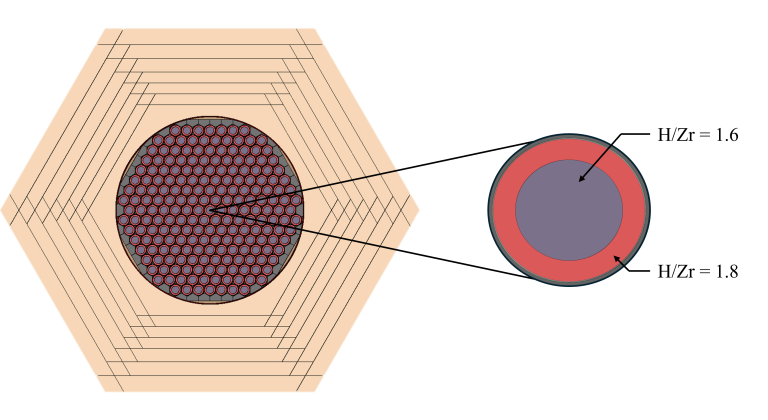
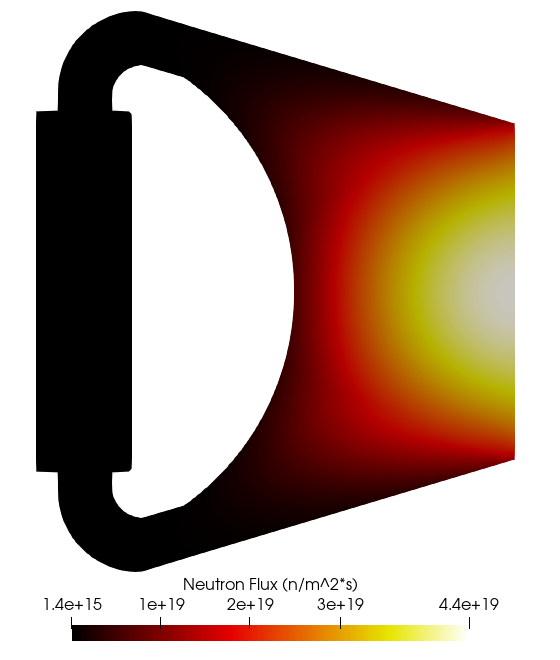
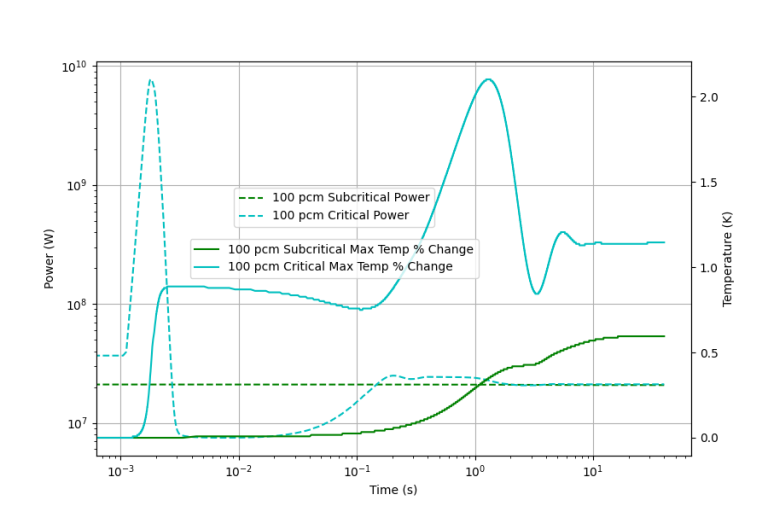
Molten Salt Reactors (MSRs) offer potential benefits in safety, fuel utilization, and power density but are complex systems with closely coupled multiphysics effects. Work initially facilitated through the Fission–Fusion Hybrid (FFH) project developed workflows within two open-source codes (GeN-Foam and OpenMC) to analyze the safety of transuranic (TRU)-fueled critical systems, as well as to compare subcritical and critical systems under transient accident scenarios. The analysis found that subcritical operation creates new operational complexity but performs much better in reactivity insertion scenarios, where critical TRU systems (especially those with a majority of minor actinides) are unstable.
Modeling of Pebbles in Pebble Bed Reactors
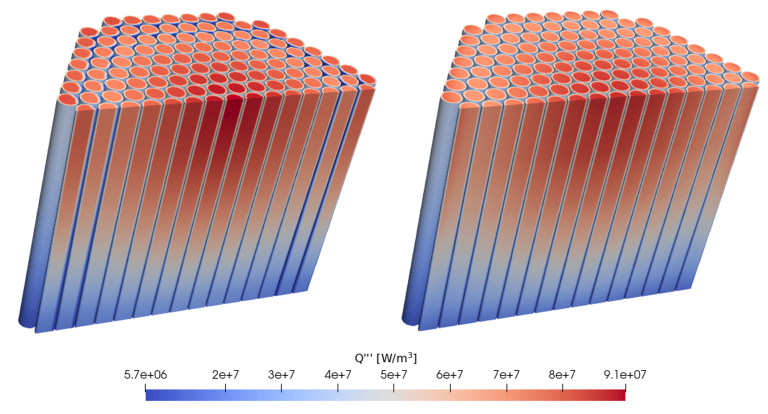
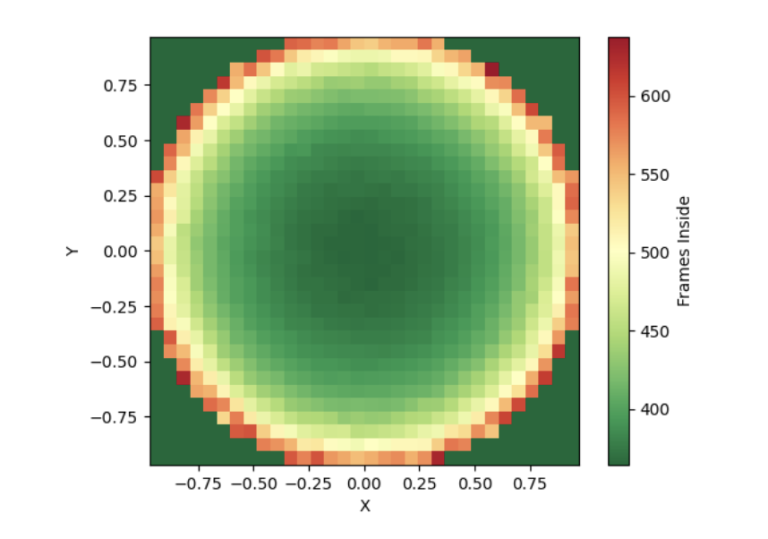
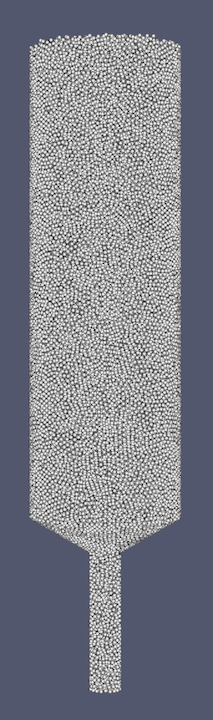
To accurately analyze pebble-bed reactors, pebble behavior must be modeled to determine flow paths and pebble residence times. We have ongoing work using the DEM code Project Chrono to model pebbles in pebble-bed reactors with varied geometries. The results are then used in Monte Carlo simulations to determine reactor performance, particularly fuel utilization.
Coupled Neutronics and Thermal-Hydraulics Stability Analysis of a Small Boiling Water Reactor (sBWR)
Small boiling water reactors (SBWRs) are being actively pursued as part of the next generation of nuclear energy, particularly those that operate under natural circulation. The challenges associated with this type of design include instabilities that can occur as a result of the two-phase flow present. To better understand these instabilities, the analysis of these reactors can be performed using the coupled neutronics and thermal-hydraulics codes PARCS and TRACE. This allows the multiphysics feedback to be more accurately captured within the model. This work aims to enhance the criteria for defining stable regions of operation by simulating and studying the behavior of the BWRX-300.
This work is supported by the U.S. Nuclear Regulatory Commission.
Power Uprates and Cycle Extensions for Pressurized Water Reactors using Accident Tolerant Fuel and Irregular Assemblies
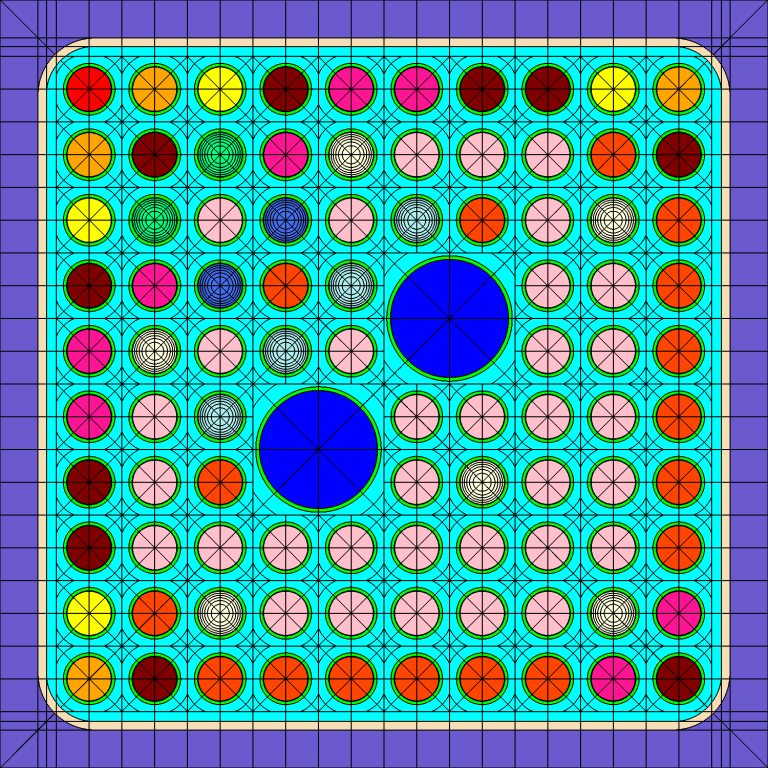
This work involves improving the performance, safety, and economic viability of Pressurized Water Reactors (PWRs). Specifically, fuel assemblies and reactor core loading patterns are designed using SCALE (assembly analysis) and PARCS (core analysis), resulting in power and burnup distributions that are used to further iterate on beneficial core designs. Current work aims to design cores with extended cycles and/or power uprates, utilizing accident-tolerant fuel to ensure key safety limits remain satisfied. Future work will expand on this by analyzing an irregular, backward-compatible fuel assembly with more fuel pins and the potential for greater power densities.