The realization of practical fusion energy depends not only on achieving sustained fusion reactions, but on the development of robust, deployable fusion power plant technologies. In particular, fusion blankets must reliably extract heat, breed tritium fuel, and operate under extreme neutron and magnetic environments, all while providing sufficient data to support system monitoring and performance assessment. These challenges represent critical sources of technical and deployment risk for future fusion power plants. Our research focuses on advancing fusion technology through physics-based modeling and conceptual design, with emphasis on blanket systems, tritium breeding and monitoring, and the integration of models with experimental programs.
Fusion Neutrons for Integrated Blanket Technology Development Through Advanced Testing and Design
We are leading a multi-institution collaboration focused on advancing fusion blanket technology through coordinated modeling, testing, and design. This effort will bring together researchers from academia, national laboratories, and industry to address critical technology gaps that must be closed to enable practical fusion power plants. Fusion blankets will play a central role in future fusion systems: they must extract heat efficiently, breed tritium fuel, and operate reliably under intense neutron irradiation and strong magnetic fields, while also providing the data needed to support system monitoring, validation, and design confidence.
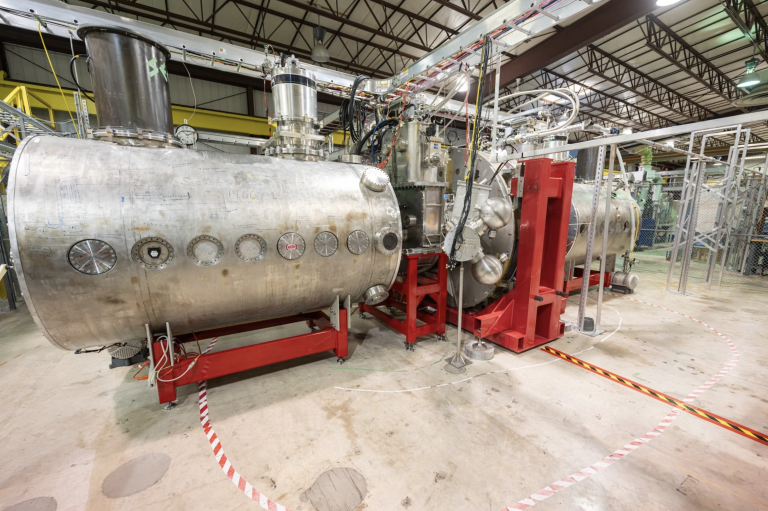
Our work will emphasize the close integration of physics-based modeling with experimental programs to evaluate blanket performance under conditions relevant to fusion power plants. Experimental activities will leverage state-of-the-art facilities, including SHINE Technologies’ Fusion Linear Accelerator for Radiation Effects (FLARE) and the Wisconsin High-Temperature Superconducting Axisymmetric Mirror (WHAM), operated as a public–private partnership with Realta Fusion. The collaboration will include faculty and researchers from the University of Wisconsin–Madison and partner institutions, including MIT, the University of Illinois Urbana–Champaign, the University of New Mexico, Argonne National Laboratory, Lawrence Livermore National Laboratory, and Princeton Plasma Physics Laboratory, as well as industry and systems partners from SHINE Technologies, Realta Fusion, the Electric Power Research Institute, and Rockwell Automation.
This work is supported by the U.S. Department of Energy, Office of Science, Fusion Energy Sciences, through the Fusion Innovative Research Engine (FIRE) Collaboratives program.

Digital Models for Tritium Monitoring in Fusion Power Plants
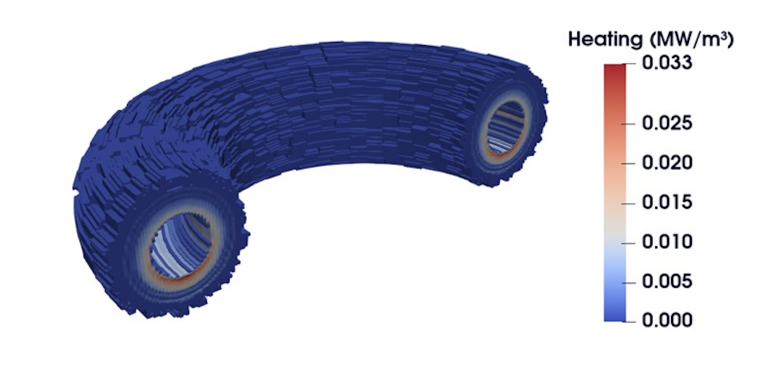
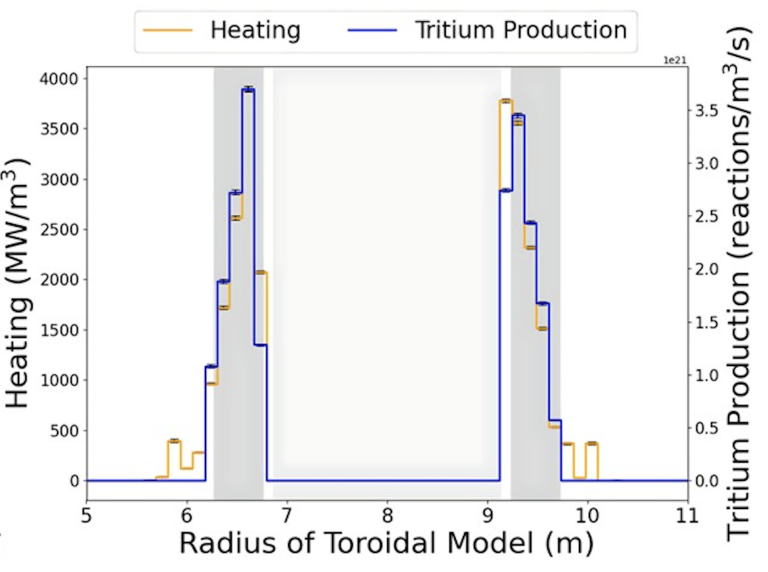
We are developing computational methods to support tritium accountancy in future fusion power plants, where tritium is bred internally and must be monitored in environments that are difficult or impossible to assay directly. Accurate accounting of tritium inventories is essential for operational confidence, safety, and stewardship, yet direct measurement within fusion blanket systems is not feasible under normal operating conditions. This project addresses that challenge by advancing indirect, model-based approaches to tritium monitoring.
Our work will focus on developing physics-based models of tritium generation and transport in fusion systems and correlating spatial tritium distributions with in-situ sensor measurements. These efforts will consider a range of sensor modalities and operating conditions, with the goal of inferring otherwise unobservable tritium inventories from realistic measurement data.
This work is supported by the U.S. Department of Energy, National Nuclear Security Administration (NNSA), through the Consortium for Enabling Technologies and Innovation (ETI) 2.0.
Fusion Fuel Cycle Modeling and Tritium Supply Analysis
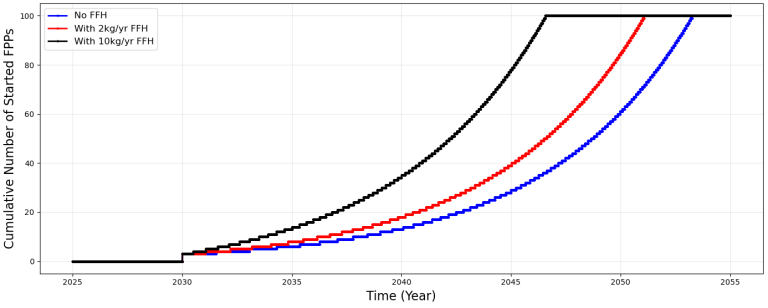
A mixture of deuterium (H-2) and tritium (H-3) is the most commonly pursued fusion fuel for energy applications due to relatively low temperatures and pressures needed for high fusion reaction rates. Deuterium is relatively common in seawater, but tritium has a relatively short half-life of 12.3 years and kg scale quantities are only currently available through production in existing fission facilities. D-T fusion facilities use about 56 kg/GW-year, so Fusion Power Plants (FPPs) plan to produce their own tritium, but startup of new FPPs may still be limited due to limited tritium supply.
Initially facilitated through the Fission-Fusion Hybrid (FFH) project, the fission fuel cycle code CYCLUS was applied to fusion fuel cycles through the introduction of the TRICYCLE archetype. CYCLUS allows for flexible modular modelling of complex systems with multiple facility types, which allows for the modelling of an uncertain fusion future with fission tritium production, fusion demonstrators, and FPPs with vastly varied characteristics. Examples of outputs are shown on the right, including the available commercial tritium supply with and without commercial and ITER sinks as well as the startup of 2GW DEMO-like FPPs with and without external sources of tritium.


Fission-Fusion Hybrid
We are performing conceptual design studies on a subcritical fission fusion hybrid reactor, which could reuse and reduce the waste of long-lived portions of spent nuclear fuel through minor actinide (MA) burning. Such a concept could use a relatively near-term fusion reactor as a high intensity neutron source such as WHAM++ or BEAM. With compact fusion devices with powers on the order of 1MW, a fission power optimized design can achieve a Tritium Breeding Ratio (TBR) of over 40, MA burnup of 200 kg/year, and 500MWth of blanket heating all while operating at ~10βeff below critical. This project includes a broad range of nuclear topics such as the fission and fusion nuclear fuel cycles, economics of advanced reactors, neutronics and thermal-hydraulics design of advanced reactors, and fusion energy technology.