Fusion Nuclear Technology
Our work in fusion nuclear technology focuses on the systems needed to turn fusion reactions into practical energy systems. We study fusion blankets, tritium management, and fuel-cycle constraints using computational modeling, systems engineering, and conceptual design. These topics are closely linked: blankets must capture energy from fusion neutrons and produce tritium fuel, plant systems must be able to monitor and account for tritium as it moves, and the broader fuel cycle must supply enough tritium for fusion power plants to start up and grow.
A major part of this work is our leadership and technical role in a multi-institution effort on fusion blanket technology. Within that effort, our group works on modeling, model-based systems engineering, and design analysis that help connect blanket concepts, facility testing, and power-plant requirements. In parallel, we develop computational methods for tritium monitoring and accountancy inside fusion plants and carry out system-level studies of tritium supply and demand. Together, these efforts address practical questions about how fusion systems can be designed, monitored, fueled, and deployed at power-plant scale.
Fusion Neutrons for Integrated Blanket Technology Development Through Advanced Testing and Design
We are leading a multi-institution collaboration focused on advancing fusion blanket technology through coordinated modeling, testing, and design. This effort will bring together researchers from academia, national laboratories, and industry to address critical technology gaps that must be closed to enable practical fusion power plants. Fusion blankets will play a central role in future fusion systems: they must extract heat efficiently, breed tritium fuel, and operate reliably under intense neutron irradiation and strong magnetic fields, while also providing the data needed to support system monitoring, validation, and design confidence.
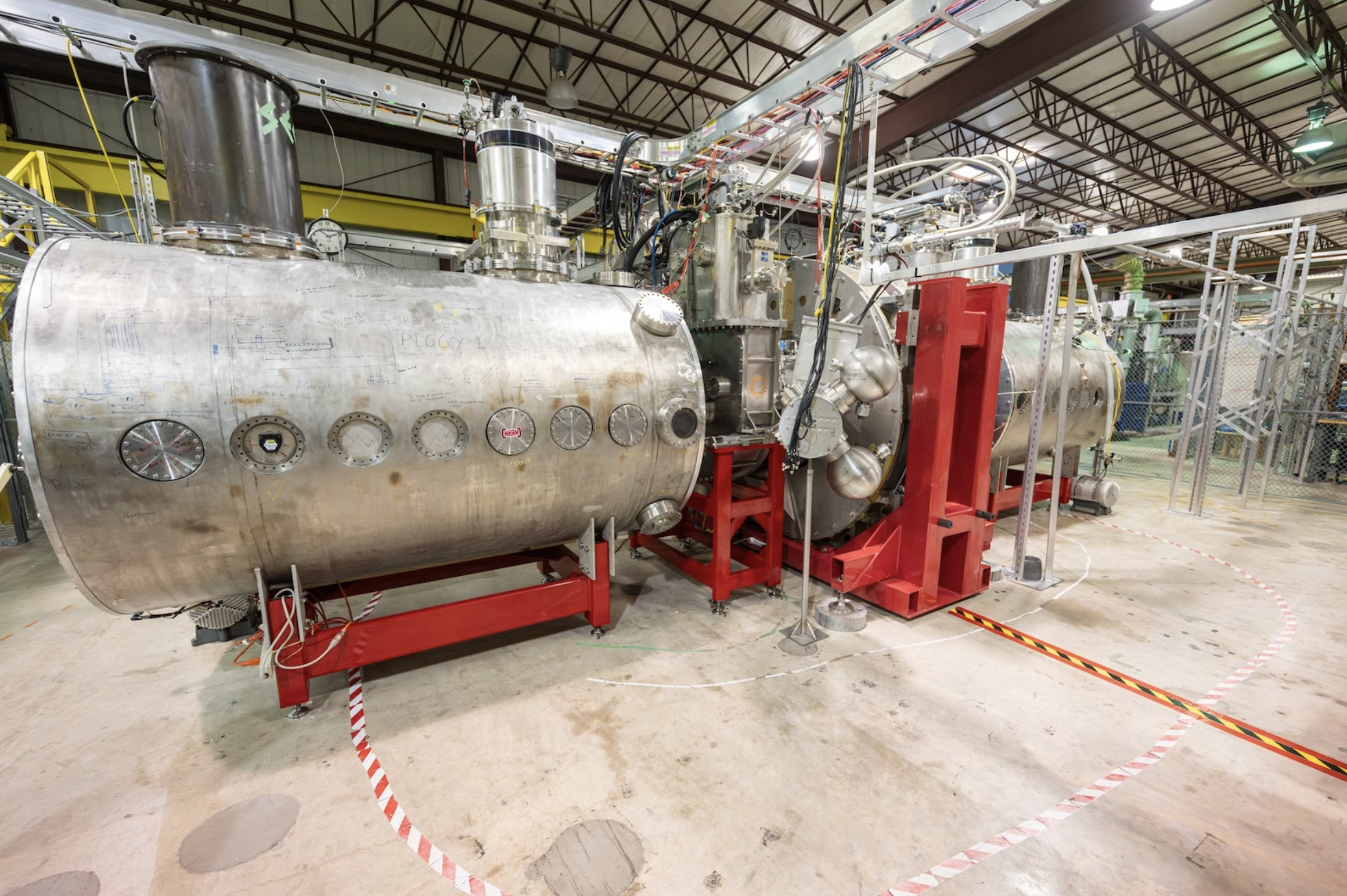
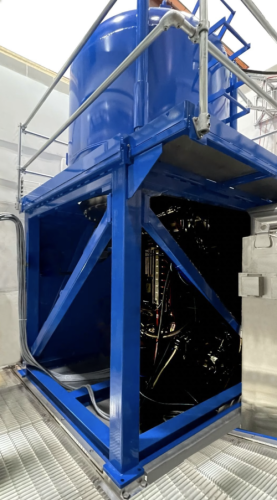
Our work will emphasize the close integration of physics-based modeling with experimental programs to evaluate blanket performance under conditions relevant to fusion power plants. Experimental activities will leverage state-of-the-art facilities, including SHINE Technologies’ Fusion Linear Accelerator for Radiation Effects (FLARE) and the Wisconsin High-Temperature Superconducting Axisymmetric Mirror (WHAM), operated as a public–private partnership with Realta Fusion. The collaboration will include faculty and researchers from the University of Wisconsin–Madison and partner institutions, including MIT, the University of Illinois Urbana–Champaign, the University of New Mexico, Argonne National Laboratory, Lawrence Livermore National Laboratory, and Princeton Plasma Physics Laboratory, as well as industry and systems partners from SHINE Technologies, Realta Fusion, the Electric Power Research Institute, and Rockwell Automation.
This work is supported by the U.S. Department of Energy, Office of Science, Fusion Energy Sciences, through the Fusion Innovative Research Engine (FIRE) Collaboratives program.
Computational Methods for Tritium Monitoring and Accountancy
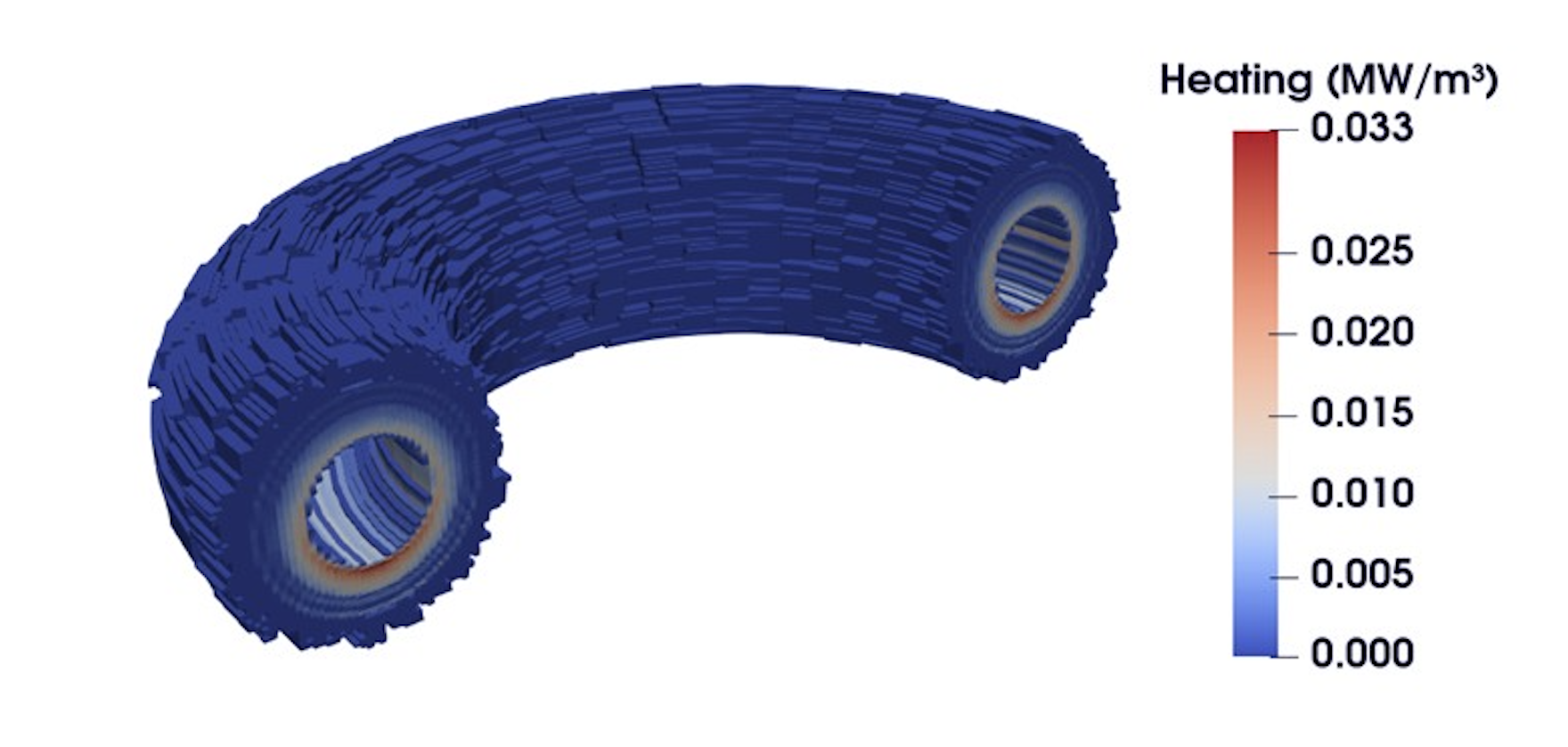
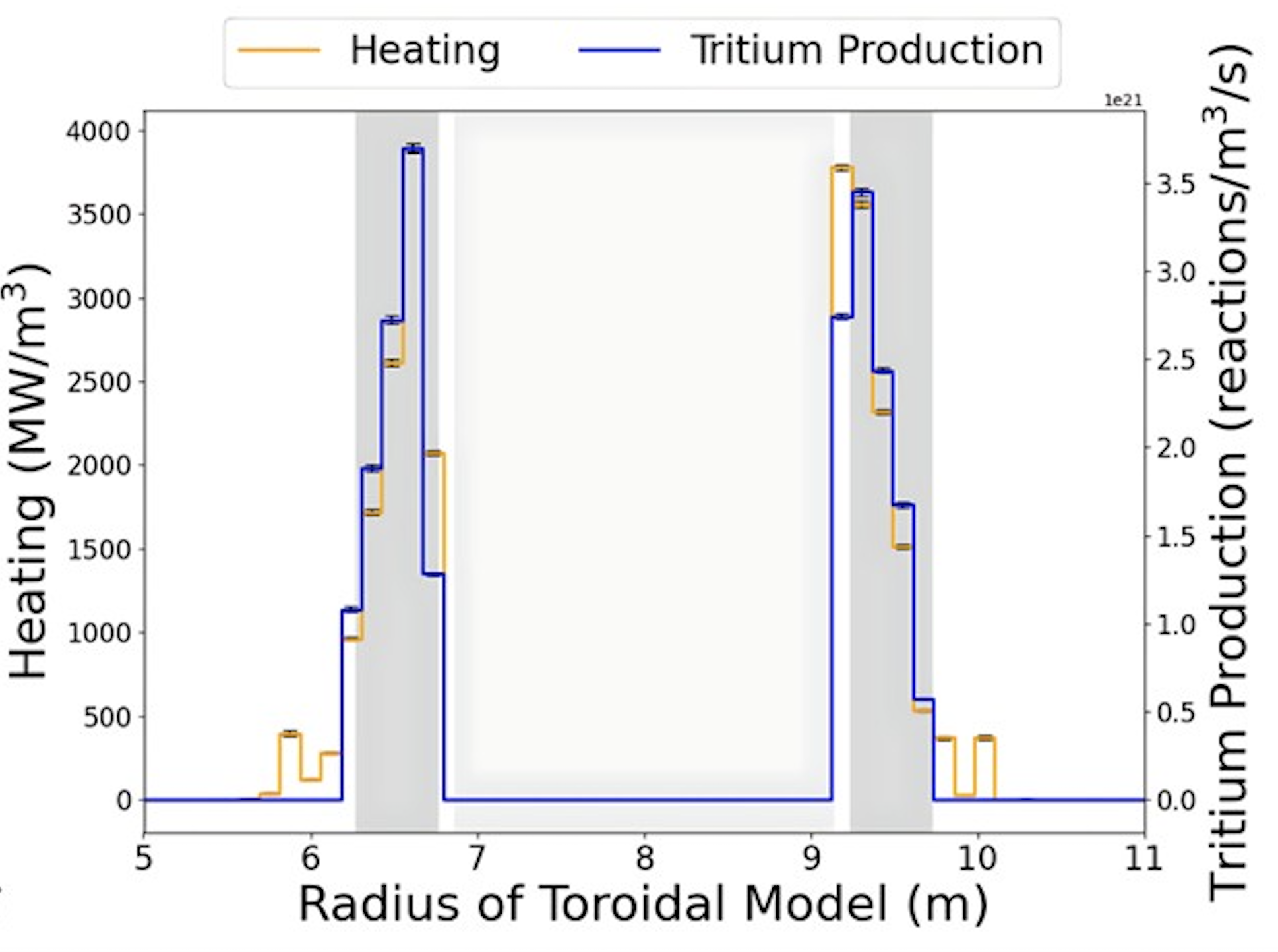
We are developing computational tools to understand how tritium is generated, transported, measured, and accounted for inside fusion power plants. Tritium is a key fuel for many fusion concepts, but it is also radioactive and difficult to track once it moves through complex blanket, coolant, and processing systems. Our work uses component-, system-, and plant-scale simulations to study tritium production and transport, and to evaluate how monitoring approaches could support safety, operations, and nuclear material accountancy.
We are also simulating whether likely monitoring methods could detect when tritium behavior differs from expectations, including during unusual or off-normal operating conditions. This work matters because future fusion facilities will need practical ways to verify tritium inventories without interrupting plant operation or requiring unrestricted access to every part of the system.
This work is supported by the U.S. Department of Energy, National Nuclear Security Administration (NNSA), through the Consortium for Enabling Technologies and Innovation (ETI) 2.0.
Fusion Fuel Cycle Modeling and Tritium Supply Analysis
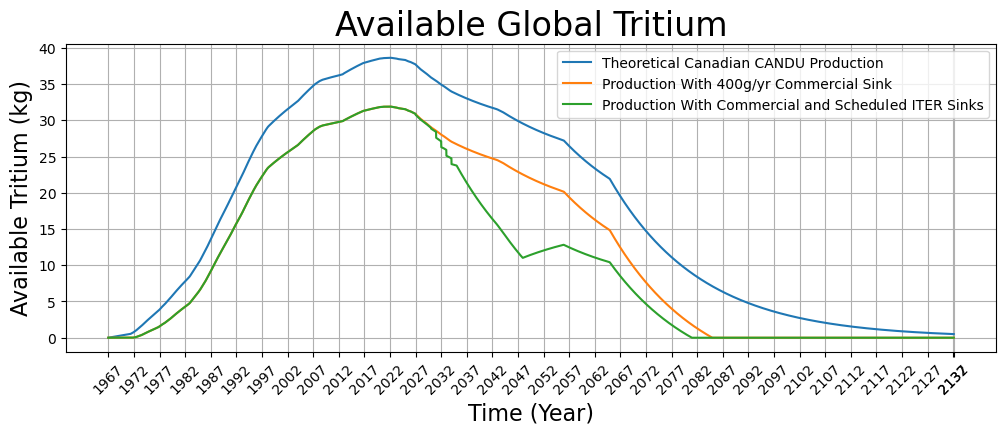
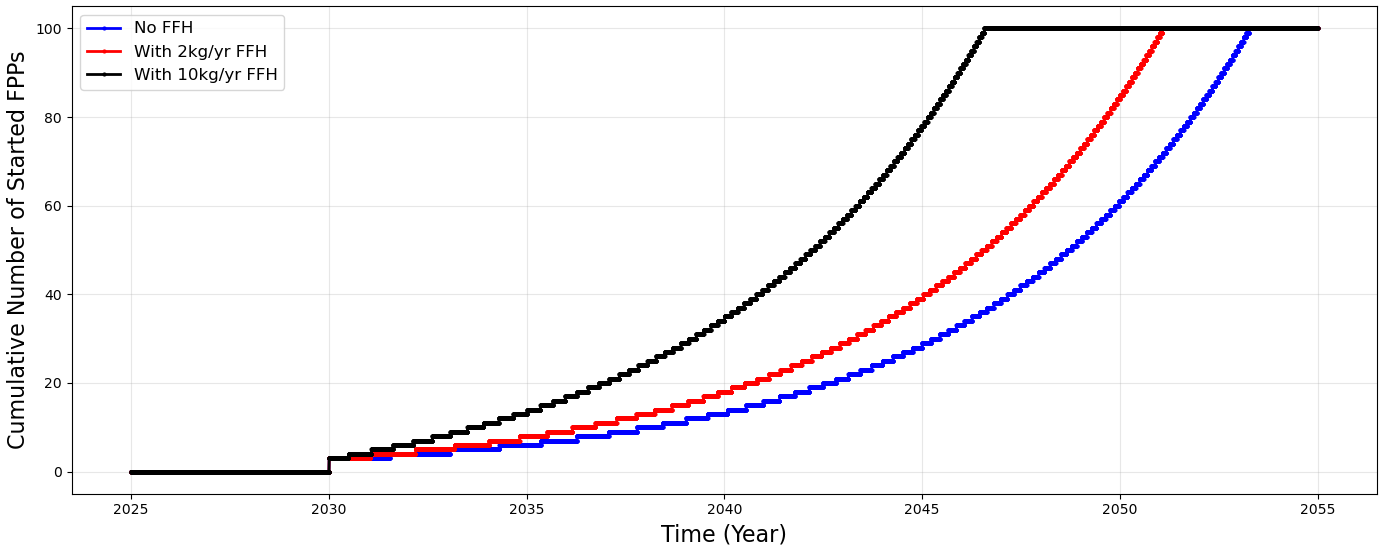
A mixture of deuterium (H-2) and tritium (H-3) is the most commonly pursued fusion fuel for energy applications due to relatively low temperatures and pressures needed for high fusion reaction rates. Deuterium is relatively common in seawater, but tritium has a relatively short half-life of 12.3 years and kg scale quantities are only currently available through production in existing fission facilities. D-T fusion facilities use about 56 kg/GW-year, so Fusion Power Plants (FPPs) plan to produce their own tritium, but startup of new FPPs may still be limited due to limited tritium supply.
Initially facilitated through the Fission-Fusion Hybrid (FFH) project, the fission fuel cycle code CYCLUS was applied to fusion fuel cycles through the introduction of the TRICYCLE archetype. CYCLUS allows for flexible modular modelling of complex systems with multiple facility types, which allows for the modelling of an uncertain fusion future with fission tritium production, fusion demonstrators, and FPPs with vastly varied characteristics. Examples of outputs are shown on the right, including the available commercial tritium supply with and without commercial and ITER sinks as well as the startup of 2GW DEMO-like FPPs with and without external sources of tritium.
Development of a Fission-Fusion Hybrid System for Transuranic Waste Processing
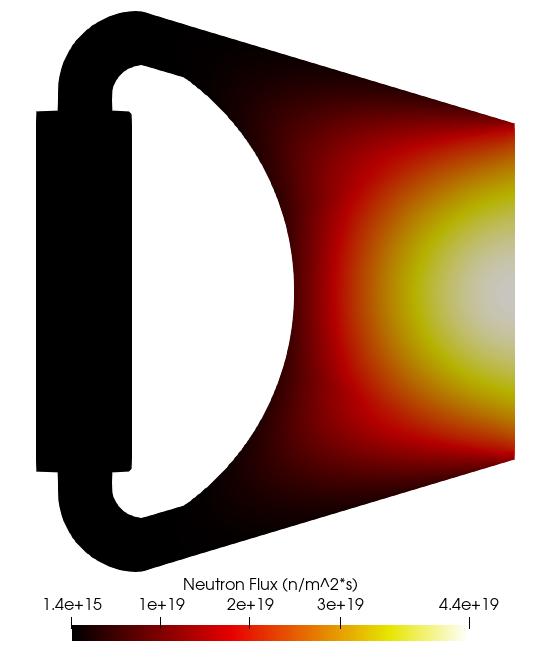
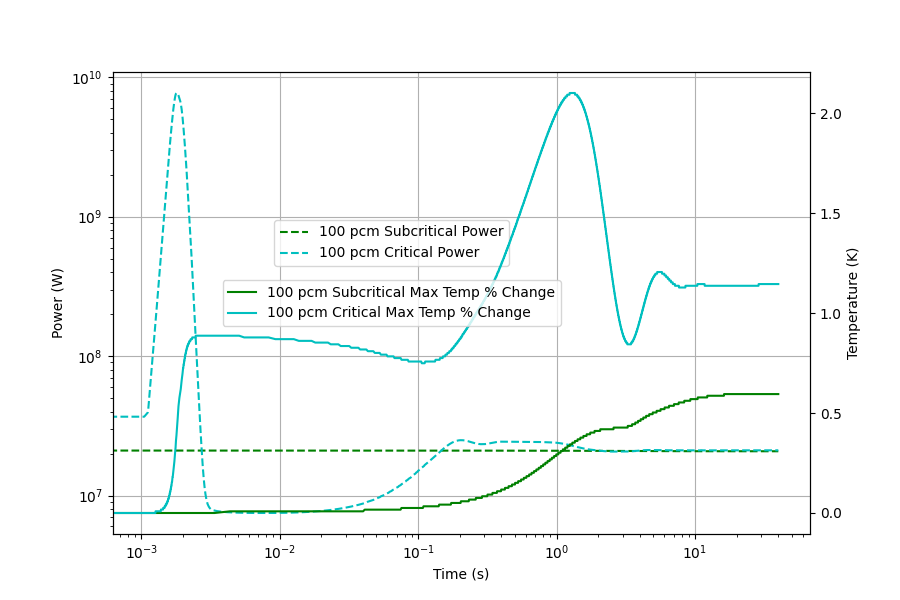
Molten Salt Reactors (MSRs) offer potential benefits in safety, fuel utilization, and power density but are complex systems with closely coupled multiphysics effects. Work initially facilitated through the Fission–Fusion Hybrid (FFH) project developed workflows within two open-source codes (GeN-Foam and OpenMC) to analyze the safety of transuranic (TRU)-fueled critical systems, as well as to compare subcritical and critical systems under transient accident scenarios. The analysis found that subcritical operation creates new operational complexity but performs much better in reactivity insertion scenarios, where critical TRU systems (especially those with a majority of minor actinides) are unstable.